Do you need to transform complex data into rigorous results and smart decisions?
Hi! I’m César, a Data Scientist capable of bridging the gap between academic statistical rigor and the technical agility required by modern projects. My job is to ensure that your data is not just processed, but tells a valid, reproducible, and useful story.
Whether you are optimizing a business process or validating high-level scientific research, my approach guarantees absolute precision in every analysis.
𝙈𝙔 𝙒𝙊𝙍𝙆𝙄𝙉𝙂 𝙋𝙃𝙄𝙇𝙊𝙎𝙊𝙋𝙃𝙔:
📍 𝗥𝗶𝗴𝗼𝗿 𝗼𝘃𝗲𝗿 𝗮𝘀𝘀𝘂𝗺𝗽𝘁𝗶𝗼𝗻𝘀: I use robust statistical validation to ensure that findings are significant and not just products of chance.
📍 𝗣𝗿𝗼𝗱𝘂𝗰𝘁𝗶𝗼𝗻 𝗖𝗼𝗱𝗲 & 𝗥𝗲𝘃𝗶𝗲𝘄: I don’t just write clean code; I’m an expert at reviewing and optimizing existing R scripts to ensure they follow best practices.
📍 𝗦𝗺𝗮𝗿𝘁 𝗔𝘂𝘁𝗼𝗺𝗮𝘁𝗶𝗼𝗻: Specialist in migrating manual workflows (such as complex Excel processes) to automated R and Python environments, reducing errors and execution times.
𝙎𝙀𝙍𝙑𝙄𝘾𝙀𝙎 𝙄 𝙋𝙍𝙊𝙑𝙄𝘿𝙀:
𝗦𝗧𝗔𝗧𝗜𝗦𝗧𝗜𝗖𝗔𝗟 𝗔𝗡𝗔𝗟𝗬𝗦𝗜𝗦 & 𝗔𝗖𝗔𝗗𝗘𝗠𝗜𝗖 𝗖𝗢𝗡𝗦𝗨𝗟𝗧𝗜𝗡𝗚
• 𝗥𝗲𝘀𝗲𝗮𝗿𝗰𝗵 & 𝗧𝗵𝗲𝘀𝗶𝘀 𝗦𝘂𝗽𝗽𝗼𝗿𝘁: I perform in-depth statistical analysis, hypothesis testing, and multivariate modeling for academic projects requiring scientific rigor.
• 𝗘𝘅𝗽𝗲𝗿𝗶𝗺𝗲𝗻𝘁𝗮𝗹 𝗗𝗲𝘀𝗶𝗴𝗻: Advice on structuring experiments to ensure that data collection leads to solid conclusions.
• 𝗖𝗼𝗱𝗲 𝗥𝗲𝘃𝗶𝗲𝘄 & 𝗥𝗲𝗳𝗮𝗰𝘁𝗼𝗿𝗶𝗻𝗴: Auditing R scripts to improve efficiency, fix bugs, and guarantee reproducibility.
𝗗𝗔𝗧𝗔 𝗦𝗖𝗜𝗘𝗡𝗖𝗘 & 𝗕𝗨𝗦𝗜𝗡𝗘𝗦𝗦 𝗦𝗢𝗟𝗨𝗧𝗜𝗢𝗡𝗦
• 𝗔𝘂𝘁𝗼𝗺𝗮𝘁𝗶𝗼𝗻 & 𝗠𝗶𝗴𝗿𝗮𝘁𝗶𝗼𝗻: I transform your Excel spreadsheets into robust, automated processes in R/Python.
• 𝗣𝗿𝗲𝗱𝗶𝗰𝘁𝗶𝘃𝗲 𝗠𝗼𝗱𝗲𝗹𝗶𝗻𝗴: Developing Machine Learning models for demand forecasting, segmentation, and anomaly detection.
• 𝗔𝗱𝘃𝗮𝗻𝗰𝗲𝗱 𝗩𝗶𝘀𝘂𝗮𝗹𝗶𝘇𝗮𝘁𝗶𝗼𝗻: Creating interactive dashboards with R Shiny or Power BI to explore data and communicate insights clearly.
𝙈𝙔 𝘾𝙊𝙈𝙈𝙄𝙏𝙈𝙀𝙉𝙏 𝙏𝙊 𝙔𝙊𝙐:
✅ 𝗧𝗲𝗰𝗵𝗻𝗶𝗰𝗮𝗹 𝗣𝗿𝗲𝗰𝗶𝘀𝗶𝗼𝗻: My academic background allows me to guarantee that the methods applied are correct for each data type.
✅ 𝗧𝗿𝗮𝗻𝘀𝗽𝗮𝗿𝗲𝗻𝗰𝘆 & 𝗥𝗲𝗽𝗿𝗼𝗱𝘂𝗰𝗶𝗯𝗶𝗹𝗶𝘁𝘆: I deliver documented code and clear explanations; you will understand the “how” and “why” behind every result.
✅ 𝗠𝗮𝗿𝗸𝗲𝘁 𝗩𝗲𝗿𝘀𝗮𝘁𝗶𝗹𝗶𝘁𝘆: Ability to adapt technical language depending on the audience, from academic committees to corporate boards.
𝙒𝙃𝘼𝙏’𝙎 𝙉𝙀𝙓𝙏? If you have a data challenge, research to validate, or a process to automate, let’s talk.
📩 Send me a message with a description of your data and goals.
Translating complex data into business decisions

About me
dCUR for dimensionality reduction, and popstudy, for time series analysis and other methods used in demographic estimates, both available on CRAN.Formal Education
Experience

Business-Applied Statistical Results
To address the need for managing regulatory risks and optimizing commercial offerings, I executed Stress Testing and BUST (Bottom-Up Stress Test) for SUGEF. My primary role involved projecting key macroeconomic variables—such as inflation, interest rates, and exchange rates—where I successfully synthesized statistical results with senior management’s expert judgment. This balance ensured that projections were not merely figures, but validated scenarios accepted by the business for critical decision-making.
Rather than providing “black box” models, I delivered transparent tools that enabled managers to clearly identify the right products for each client. By automating these reports and engineering high-value variables through Machine Learning, I transformed the Data Warehouse into a solutions engine that aligns technical rigor with the organization’s strategic objectives.

Statistical Consulting for Strategic Decision-Making
As a specialist consultant in statistics and data intelligence, I have led high-complexity projects for international organizations (UNICEF, UNFPA, IDB) and government institutions, transforming massive datasets into strategic assets. My intervention has been pivotal in national milestones, ranging from the technical validation of the 2022 Census—through the processing of territorial microdata—to the methodological design of the Child and Adolescent Well-being Index (IBINA). By leveraging advanced classification models, statistical inference, and the development of custom visualization applications in R, I have optimized the capacity of governments and organizations to ground public policies and investment plans in solid evidence.
My experience transcends borders, having collaborated on international consulting projects within global work ecosystems, where I have executed everything from critical descriptive analyses to predictive models for digital educational transformation in Latin America. By integrating scientific rigor with a results-oriented vision, I have successfully turned complex data structures into intuitive management tools, ensuring that every statistical finding translates into a competitive advantage or a measurable social impact. My focus is not merely on processing information, but on designing the analytical infrastructure that enables organizations to lead in the data era.

Applied Statistics in the Political-Electoral Field
Within the framework of the 2018 Costa Rican national elections—marked by unprecedented political volatility—I collaborated with the CIEP-UCR research team to strengthen the robustness of the post-election study. My contribution was fundamental during the design phase, where I helped formulate strategic questions for the national survey of 1,500 individuals, ensuring that the variables captured the new dynamics of citizen behavior with precision. I was responsible for transforming complex data into actionable insights through the creation of data visualizations and the execution of descriptive statistical analyses. These tools allowed for the identification of key patterns in social discontent and participation, facilitating a clear interpretation of the sociodemographic and attitudinal factors that influenced the electoral process. My work ensured that the project’s findings were presented with scientific rigor and high visual clarity, consolidating this study’s position as the most technically credible benchmark in the country.

Higher Education Instructor
Faced with the growing gap between massive data accumulation and the extraction of real value, I led the design and execution of advanced technical analytics programs at the University of Costa Rica. My objective was to empower multidisciplinary professionals to overcome the challenge of processing raw data and converting it into strategic assets using cutting-edge tools and agile methodologies such as CRISP-DM.
I optimized learning processes by implementing advanced environments in R, Python, and SQL, focusing on automated data capture (CSPro), high-impact visualization, and the deployment of Machine Learning models for predictive classification. I successfully certified groups of experts in large-scale data manipulation and model validation under Git version control standards, ensuring 100% reproducibility in statistical analysis and a substantial improvement in the accuracy of inferences for evidence-based decision-making.
In this role, I served as a lecturer for the following courses:
Principles of Machine Learning for Classification Problems with R
Statistical Programming with R
Computational Statistics II
General Statistics II
Introductory Statistics II
Introductory Statistics I

Applied Statistical Analysis for Industry
In a business environment saturated with information, the primary challenge was to train future managers to transform raw data into actionable business intelligence. I led the design and execution of the Probability and Statistics I program, where I streamlined the transfer of technical knowledge toward practical applications in the economic field. My intervention focused on developing critical competencies, ranging from the structuring of statistical research and data collection instrument design to the mastery of advanced probability models ($Binomial$, $Normal$, and $Poisson$) and measures of variability.To ensure academic excellence, I implemented a continuous evaluation system based on real-world case studies and complex problem-solving. This approach ensured that students not only mastered the mathematics but also learned to interpret data symmetry and behavior for strategic decision-making. The result was a comprehensive academic success rate, with 100% of the evaluation tied to practical application, culminating in final reports that met professional quality standards and statistical rigor.
Population Estimates and Projections
Faced with the challenge of updating population estimates and projections for 1950–2100 amidst accelerating demographic shifts and complex datasets, I led the project’s methodological and technological development to ensure the accuracy of public policies. I optimized institutional capacity by creating and publishing the popstudy R package on CRAN. This tool automated the processing of administrative records and the implementation of advanced models, such as Lee-Carter for mortality and K-means clustering for functional data analysis.
This intervention not only modernized the institution’s analytical infrastructure but also exponentially increased operational efficiency by migrating critical processes from SPSS to R. The direct impact is seen in the delivery of a robust, comparable methodology that enables continuous monitoring of national demographic dynamics through the year 2100, ensuring high-quality data for the country’s inclusive and sustainable development.

Measurement Strategist
Transforming Judicial Service Perception into High-Impact Decisions
The Judiciary of Costa Rica faced a critical information gap: a lack of specific data regarding quality perception within the Judicial Auxiliary sector, which hindered decision-making aligned with the Institutional Strategic Plan. To address this challenge, I led the methodological and technical design of a research project focused on capturing the voice of the external user (citizens). My intervention centered on creating a robust measurement instrument grounded in ten key quality factors—such as reliability, responsiveness, and assurance—ensuring the technical traceability required to evaluate sensitive services like those of the Public Prosecutor’s Office and the Judicial Investigation Department (OIJ).
As a direct result, I developed a replicable methodological framework, including a specialized sampling design and multivariate analysis tools for critical data tabulation. This project not only provided the first authentic diagnosis of perceived service quality but also delivered a strategic asset to the Service Comptroller’s Office to optimize public management and strengthen the social legitimacy of the justice system.
Statistical Support for Research Projects and University Courses
- INISA: Analysis of parasitic status in children within the South-Central region (2016-2017)
- Interrelations between public policy and migration (2015)
- Statistics for Social Sciences (2014 – 2016)
- Introductory Statistics (2014 – 2016)
- Statistics for Biologists (2015-2016)
- Tutoring for Social Sciences and Health Sciences students (2014-2016).
- Probability and Statistical Inference (2013 – 2014)
- Applied Regression Models (2016)
A selection of my work
District Data Analysis and Validation for the 2022 Census
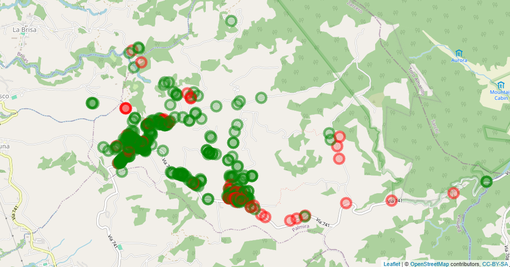
Faced with the complexity of the 2022 National Census database and the need for high-quality information for public policy, I led the technical analysis and validation for all 487 districts in Costa Rica. Leveraging R, I developed a rigorous methodology to audit population structure and coverage, identifying critical patterns in unvisited households and calculating precise sample sizes for areas with low representativeness. My intervention was key to bolstering data integrity by classifying districts by complexity level and validating statistical imputation methods.
This technical effort resulted in the delivery of five strategic outputs that ensured the census information was viable for timely disclosure. I successfully transformed raw data into a validated, reliable structure, providing INEC and UNFPA with a solid foundation for national decision-making. My management not only filled a specialized technical gap but also guaranteed that key indicators for omission and coverage met international statistical quality standards.
Digital Architecture for National Demographic Projection Visualization (INEC-UNFPA)
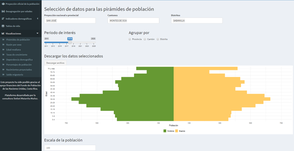
In the context of national planning, a critical need was identified to transform complex demographic data into accessible decision-making tools. I led the technical supervision and validation of an interactive Shiny (R) interface designed to democratize access to INEC population estimates and projections. My intervention ensured that the application was not only technically robust but also compatible with institutional programming standards, guaranteeing a seamless transition to the 2022 Census data.
Through a co-creation methodology and rigorous review, I validated the integration of advanced modules, such as Karup-King splitters for age groups and the automation of critical demographic indicators (growth rates, dependency ratios, and life tables). The result was a high-precision platform that enables data downloads in multiple formats and generates dynamic visualizations, such as population pyramids and temporal trends. This project provided government entities with an agile consultation tool that optimizes the planning of projects focused on social welfare.
Predictive Optimization for Public Health - Advanced Infant Mortality Analysis
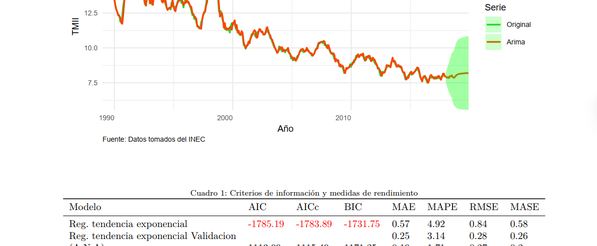
Given the volatility of the Year-over-Year Infant Mortality Rate (IMR) in Costa Rica and its critical impact on population projections and regional budget allocation, I led an exhaustive analysis of the 1989–2017 time series. Using R and advanced data visualization techniques, I developed a robust methodology to transform raw INEC data into a strategic decision-making tool.I designed and benchmarked over 550 statistical models, including regression, exponential smoothing, and ARIMA models with intervention. I successfully implemented an $ARIMA(3,1,4)(1,0,1)_{12}$ model with interventions across five key periods, which demonstrated superior accuracy in both training and validation sets. This technical intervention enabled the generation of reliable 2018 forecasts with a 95% confidence interval (values between 5.54 and 10.38), providing a solid foundation for national socioeconomic planning.
What they say about me